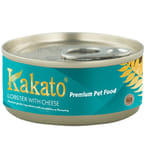
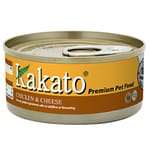
Kakato cat wet food is a type of moist food product specifically formulated for felines, typically presented as pâté, chunks, or shredded meat, often accompanied by various broths or gravies. These products are primarily intended to supply cats with their daily nutritional requirements, serving as a main meal or as a supplement to other foods. The composition of Kakato cat wet food generally includes meats, organ meats, fish, vegetables, and essential vitamins and minerals, aiming to ensure a balanced nutritional intake for cats. When using these products, some pet owners refer to the instructions for Kakato main meal wet food to select items suitable for their cat's age, weight, and activity level. This category of cat wet food commonly comes in metal cans, offering good shelf stability; once opened, refrigeration is recommended, and it should be consumed within a short period. A variety of flavors and formulas of Kakato cat wet food are available to cater to cats' dietary preferences.
The category of Kakato cat wet food encompasses a range of moist food products specifically formulated for feline consumption, characterized by their high moisture content and typically presented in sealed containers.
This article aims to describe the structural attributes, material composition, and usage contexts within the Kakato cat wet food category. Its purpose is purely descriptive, focusing on objective information without providing product recommendations or comparative evaluations.
Kakato Cat Wet Food: Classification by Formulation Type
Kakato cat wet food products are commonly classified based on their primary formulation type, which dictates their nutritional profile and intended dietary role. This classification typically distinguishes between complete and balanced formulas, often referred to as 'main meal' or 'meal replacement' wet foods, and supplementary formulas, frequently termed 'complementary' or 'topping' wet foods. Complete and balanced formulations are designed to provide all essential nutrients in appropriate ratios to meet a cat's daily dietary requirements when fed as the sole source of nutrition. These products adhere to specific nutritional guidelines established by regulatory bodies, ensuring they contain adequate levels of protein, fat, vitamins, and minerals. The material composition of these formulas is meticulously balanced to prevent deficiencies or excesses of specific nutrients. They often feature a primary protein source, such as chicken, fish, or other animal proteins, combined with a precise blend of fats, carbohydrates, and micronutrients. The structural form of these complete wet foods can vary, ranging from pâté or mousse consistencies to shredded or chunky preparations suspended in gravy or jelly. The manufacturing process for complete wet foods involves careful ingredient sourcing, precise mixing, and thermal processing to ensure safety and preserve nutritional integrity. This processing method often involves retort sterilization, where the sealed cans are subjected to high temperatures and pressure to achieve commercial sterility, extending shelf life without refrigeration until opened. The labeling of complete wet foods typically includes a statement indicating their nutritional adequacy for a specific life stage, such as 'for all life stages' or 'for adult maintenance.' These labels also provide detailed ingredient lists, guaranteed analysis information, and feeding guidelines based on a cat's weight and activity level. The usage context for complete Kakato cat wet food is as a primary dietary component, suitable for daily feeding to provide comprehensive nutrition. The precise ratios of macronutrients and micronutrients are central to their classification. For instance, a complete wet food for kittens will have a higher caloric density and specific nutrient profile to support rapid growth and development, including elevated levels of protein and certain minerals like calcium and phosphorus. Adult maintenance formulas, conversely, are designed to sustain health and energy levels in mature cats, while senior formulas may incorporate ingredients to support joint health or kidney function. The structural integrity of the food, whether it is a smooth paste or distinct pieces, can also influence palatability and consumption patterns, though this is secondary to nutritional completeness in classification. The processing techniques employed, such as grinding and emulsifying for pâtés versus dicing and mixing for chunky varieties, contribute to these distinct structural forms. The consistent application of these formulation and processing standards ensures that products labeled as complete and balanced meet their intended nutritional purpose for Kakato cat wet food.
Kakato Cat Wet Food: Material Composition and Structural Forms
The material composition and structural forms of Kakato cat wet food exhibit distinct variations that influence their nutritional delivery and textural attributes. The fundamental material components typically include various animal proteins as primary ingredients, such as chicken, tuna, salmon, and other fish or meat sources. These protein sources are selected for their palatability and amino acid profiles, which are essential for feline health. Beyond protein, fats are incorporated to provide energy and facilitate the absorption of fat-soluble vitamins. These fats often derive from the primary animal protein sources or are added as specific oils, such as fish oil for omega-3 fatty acids. Carbohydrate content in Kakato cat wet food is generally lower compared to dry food formulations, often sourced from ingredients like tapioca starch or small amounts of grains in some specific formulas, primarily for binding and texture rather than as a major energy source. Vitamins and minerals are added to ensure a complete nutritional profile, often in the form of premixes that include essential nutrients like taurine, an amino acid critical for feline cardiac function and vision, and various B vitamins, vitamin E, and trace minerals. Water forms a significant portion of the material composition, contributing to the high moisture content characteristic of wet foods, typically ranging from 70% to 85%. This high moisture content is a defining characteristic of Kakato cat wet food. Gelling agents or thickeners, such as guar gum, carrageenan, or locust bean gum, are frequently included to achieve specific structural forms and consistencies, creating gravies, jellies, or binding ingredients within pâté forms. The processing methods for these components involve grinding, mixing, and thermal sterilization. Grinding reduces raw ingredients to a uniform particle size, crucial for pâté or mousse textures. Mixing ensures even distribution of all ingredients, including vitamins and minerals. Thermal sterilization, typically retort processing, involves heating the sealed cans to temperatures sufficient to destroy pathogenic microorganisms and enzymes, ensuring product safety and extending shelf life. This process also contributes to the final texture, as proteins can coagulate and starches can gelatinize, affecting the structural integrity of the Kakato cat wet food. The structural forms observed in Kakato cat wet food are diverse. Pâté or mousse forms are characterized by a smooth, homogenous, and finely ground consistency, where all ingredients are uniformly blended into a soft paste. Shredded or flaked forms consist of discernible pieces of meat or fish, often suspended in a gravy or jelly, offering a more fibrous texture. Chunks or morsels are larger, more distinct pieces of protein, also typically presented in a sauce or jelly. These structural variations are achieved through different grinding and cutting techniques during preparation. For instance, a mousse consistency requires extensive grinding and emulsification, while shredded forms involve cutting cooked meat into strips. The choice of gelling agents and their concentration also critically influences the final structural form. For example, a firm jelly requires a higher concentration of gelling agents than a thin gravy. The packaging, typically in aluminum cans, plays a role in maintaining the structural integrity and sterility of the Kakato cat wet food until consumption. The internal lining of these cans is formulated to prevent interaction between the food contents and the metal, preserving flavor and preventing degradation. Understanding these material compositions and structural forms provides insight into the diverse product offerings within the Kakato cat wet food range, highlighting the meticulous formulation and processing involved in creating each specific product type.
Kakato Cat Wet Food: Usage Contexts and Environmental Properties
The properties of Kakato cat wet food can vary significantly across different usage environments or conditions, primarily influenced by factors such as storage, exposure to air, and temperature fluctuations. The most immediate change upon opening a can of Kakato cat wet food is its exposure to atmospheric oxygen. This exposure initiates oxidative processes, particularly affecting fats and fat-soluble vitamins. Oxidation can lead to the degradation of nutritional compounds and alterations in aroma and palatability. The structural form of the wet food can also be impacted; for instance, a smooth pâté might dry out and develop a crust on its exposed surface, while gravy-based products might thicken or separate. Temperature is a critical environmental factor. Prior to opening, the sealed Kakato cat wet food is designed to be shelf-stable at ambient room temperatures, typically between 10°C and 30°C. Storage outside this range, such as in excessively hot environments, can accelerate chemical degradation reactions within the food, potentially compromising its nutritional content and safety. High temperatures can also lead to the expansion of can contents, potentially stressing the can's seals. Conversely, freezing unopened cans is generally not recommended, as it can alter the food's texture upon thawing, causing separation or a less desirable consistency, though it does not typically compromise safety if the can remains intact. Once opened, the usage environment shifts dramatically. Refrigeration becomes essential to inhibit microbial growth and slow down oxidative and enzymatic degradation. Storing opened Kakato cat wet food in a refrigerator (typically 0°C to 4°C) significantly extends its safe consumption window, usually up to 24-48 hours. However, even under refrigeration, gradual changes occur. The food's aroma profile may diminish, and its texture can firm up due to chilling. The material composition, particularly the fat content, can become more viscous at lower temperatures. Exposure to ambient air, even within a refrigerated environment, can still lead to some degree of drying or crust formation on the surface of the Kakato cat wet food if not properly sealed. Therefore, transferring the contents to an airtight container or covering the opened can with a lid is a common practice to mitigate these effects. The duration of exposure to the usage environment also dictates the extent of property alteration. A small portion of Kakato cat wet food left in a bowl at room temperature for several hours will undergo significant changes in bacterial load, aroma, and texture compared to a freshly opened and served portion. The high moisture content that makes wet food palatable also makes it an ideal medium for bacterial proliferation once exposed to air and warmth. This necessitates careful management of portion sizes and prompt removal of uneaten food. The type of packaging also influences environmental properties. While most Kakato cat wet food comes in cans, some products might be packaged in pouches. Pouches, once opened, are generally more susceptible to drying and air exposure than cans, requiring even more diligent sealing or transfer to airtight containers for storage. These considerations highlight that while the inherent properties of Kakato cat wet food are established during manufacturing, their practical characteristics during consumption are dynamically influenced by the immediate post-opening usage and storage conditions.
Kakato Cat Wet Food: Product Characteristics from Sales Ranking
The following descriptions detail the material, formulation, and structural characteristics of specific Kakato cat wet food products, based on their sales ranking. These descriptions are strictly objective and do not offer any recommendations or comparative judgments regarding product quality or suitability.
Rank 1: Kakato Canned Cat and Dog Food Tuna Mousse 40g (Shared for Cats and Dogs) (TD0602THK) — This product consists of a finely ground, smooth mousse formulation, primarily composed of tuna. The material composition emphasizes a uniform texture, achieved through extensive processing of the protein source. The 40g portion size indicates a formulation designed for single-serving use, potentially as a supplement or small meal. The structural characteristic is a homogenous, soft paste, facilitating easy consumption for animals with varying dental conditions, including very young or senior animals. The formulation is designated as suitable for both cats and dogs, implying a general nutritional profile rather than species-specific specialization.
Rank 2: Kakato Canned Cat and Dog Food Tuna with Chicken 70g (Shared for Cats and Dogs) (TD0708THK) — This product features a blend of tuna and chicken as its primary protein sources. The structural form likely presents these ingredients in discernible pieces or flakes suspended within a gravy or jelly, distinguishing it from a mousse. The material composition includes a combination of fish and poultry proteins. The 70g size represents a slightly larger single serving compared to the 40g mousse. The formulation is also indicated for shared consumption by both cats and dogs, suggesting a broad nutritional base rather than specific feline dietary requirements in mind, reinforcing the general-purpose nature of the Kakato cat wet food product.
Rank 3: Kakato Canned Cat and Dog Food Chicken Mousse 40g (Shared for Cats and Dogs) (TD0601THK) — This product is characterized by a mousse consistency, with chicken as the primary protein ingredient. Similar to the tuna mousse, its structural characteristic is a smooth, finely processed paste. The material composition is centered around chicken protein, processed to achieve a uniform, soft texture. The 40g portion size aligns with single-serving applications. As with other shared products, the formulation is designed for consumption by both cats and dogs, suggesting a general nutritional profile suitable across these species, rather than highly specialized feline dietary considerations in this particular Kakato cat wet food product.
Rank 4: Kakato Cat Wet Food Complete Nutrition Single Protein Main Meal Can Kitten 1–12 Months and Weight Gain Formula Chicken Breast 70g (TD0782EIN) — This product is specifically formulated as a complete and balanced main meal for kittens aged 1 to 12 months and for weight gain purposes. The primary protein source is chicken breast, indicating a focus on a single, high-quality animal protein. The formulation is described as 'single protein,' meaning it contains only one animal protein source, which can be relevant for dietary management. The structural form is likely shredded or finely minced chicken breast in a gravy or jelly. The material composition is tailored for the specific nutritional needs of growing kittens, which typically include higher protein and fat levels, and a specific balance of vitamins and minerals to support rapid development and energy requirements. The 70g size is a standard single-serving portion for a kitten. This Kakato cat wet food product's labeling as 'complete nutrition' signifies adherence to established nutritional standards for feline growth.
Rank 5: Kakato Canned Cat and Dog Food Salmon and Tuna 170g (Shared for Cats and Dogs) (TD0824THK) — This product features a material composition combining salmon and tuna as protein sources. The 170g size indicates a larger volume, potentially for multiple servings or for larger animals. The structural form would typically involve chunks, flakes, or shredded pieces of salmon and tuna suspended in a liquid medium such as gravy or jelly. The formulation is designed for shared consumption by both cats and dogs, maintaining a general nutritional profile. The inclusion of both salmon and tuna contributes to a diverse amino acid and fatty acid profile from marine sources. The larger can size necessitates appropriate storage after opening to maintain product integrity, such as refrigeration. This particular Kakato cat wet food offering is notable for its larger volume.
Kakato Cat Wet Food: Quality Standards and Labeling Norms
Verifiable quality standards, labeling transparency, and documentation norms are integral to the production and consumer understanding of Kakato cat wet food. The primary framework for quality and safety in pet food, including wet cat food, is often dictated by regulatory bodies such as the Association of American Feed Control Officials (AAFCO) in North America, or equivalent national and regional authorities globally. AAFCO provides guidelines for pet food labeling and nutrient profiles, which many international brands voluntarily adhere to or use as a benchmark. For a Kakato cat wet food product to be labeled as "complete and balanced," it must meet specific nutrient profiles established by these bodies for a particular life stage, such as growth, adult maintenance, or all life stages. These profiles specify minimum and sometimes maximum levels for macronutrients (protein, fat, certain carbohydrates) and micronutrients (vitamins, minerals, amino acids like taurine). The documentation supporting these claims typically includes laboratory analyses of the final product and raw materials, demonstrating compliance with the nutrient profiles. Manufacturing processes for Kakato cat wet food are subject to Good Manufacturing Practices (GMPs). These practices encompass aspects such as ingredient sourcing, facility sanitation, personnel hygiene, process control, and finished product testing. Ingredient sourcing involves verifying the origin and quality of raw materials, ensuring they are fit for animal consumption. For instance, protein sources like chicken or fish are often required to be from human-grade facilities or meet specific quality parameters. Processing methods, particularly thermal sterilization (retorting), are critical for ensuring microbiological safety. This process involves precise control over temperature and duration to achieve commercial sterility, which is documented through thermal process validation studies. Labeling transparency is a key aspect of quality assurance for Kakato cat wet food. A typical label includes: an ingredient list, presented in descending order by weight; a guaranteed analysis, which provides minimum percentages for crude protein and crude fat, and maximum percentages for crude fiber and moisture; feeding guidelines; and a statement of nutritional adequacy. The ingredient list allows consumers to identify the specific components of the Kakato cat wet food, including protein sources, fats, carbohydrates, and additives like vitamins, minerals, and gelling agents. The guaranteed analysis offers quantifiable metrics for key nutritional components. The statement of nutritional adequacy explicitly states whether the product is a complete diet or a supplementary one and for which life stage it is intended. Some Kakato cat wet food products may also include claims such as "single protein," which indicates the presence of only one animal protein source, or "grain-free," signifying the absence of cereal grains. These claims must be verifiable through ingredient declarations. Furthermore, manufacturers often provide batch numbers and expiration dates, allowing for traceability and ensuring product freshness. Some brands also provide information on their website or upon request regarding their sourcing practices, quality control measures, and specific analytical data for their Kakato cat wet food products. Adherence to these verifiable standards and transparent labeling practices allows for informed assessment of the product's composition and intended nutritional role.
Kakato Cat Wet Food: Factual Insights on Composition
A verifiable factual insight regarding Kakato cat wet food, and wet cat food in general, pertains to the precise role of taurine in feline metabolism. Unlike many other mammals, felines cannot synthesize sufficient quantities of taurine endogenously, making it an essential amino acid that must be supplied through their diet. Taurine is critical for various physiological functions, including cardiac muscle function, vision, digestion, and reproductive health. A deficiency in taurine can lead to severe health issues such as dilated cardiomyopathy (a type of heart disease) and central retinal degeneration, which can result in blindness. Consequently, all complete and balanced Kakato cat wet food formulations include supplemental taurine to meet feline requirements. The amount of taurine required is specifically accounted for in the nutrient profiles set by regulatory bodies, and its inclusion is a non-negotiable aspect of nutritionally complete Kakato cat wet food. This highlights a fundamental distinction in feline dietary needs compared to omnivores or herbivores, underscoring the specialized material composition required for cat food products.
Another verifiable factual insight concerning Kakato cat wet food relates to the moisture content and its impact on feline hydration. Domestic cats historically descended from desert-dwelling ancestors, and their physiological adaptations include a high efficiency in concentrating urine. This means they are naturally inclined to obtain much of their water intake from their prey. Wet cat food, with its typically high moisture content ranging from 70% to 85%, significantly contributes to a cat's daily water intake. This characteristic is particularly beneficial for cats that do not drink sufficient amounts of water from bowls, or for those prone to urinary tract issues. The high moisture content in Kakato cat wet food helps to dilute urine, potentially reducing the risk of crystal and stone formation in the urinary tract. This inherent property of wet food formulations directly supports feline renal health and overall systemic hydration, representing a key advantage of its structural composition over dry kibble, which typically contains less than 10% moisture. This aspect of Kakato cat wet food is a direct consequence of its material composition and processing method, which incorporates a substantial proportion of water.
This article has provided a structured overview of Kakato cat wet food, detailing its classification, material composition, structural forms, and the influence of usage environments. It has also presented specific product characteristics based on sales data and discussed relevant quality standards and factual insights. The information provided is intended to enhance understanding of the category's attributes.
......View All